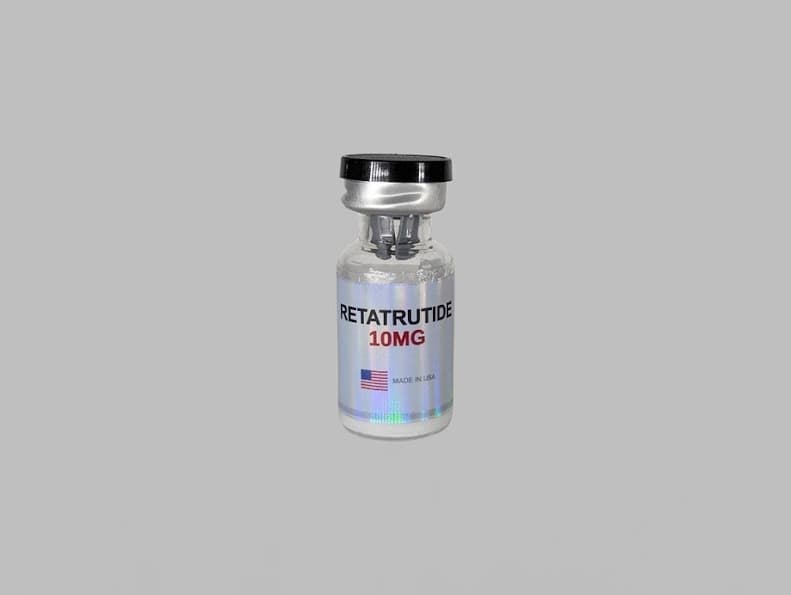
Retatrutide
Triple GIP / GLP-1 / glucagon agonist
$130.00
Size
Secure payment by card link, Zelle or crypto · discreet packaging · fast USPS shipping
Triple GIP, GLP-1, and glucagon receptor agonist engineered for cutting-edge multi-pathway metabolic research. High-purity lyophilized powder.
Research applications
- 01Multi-pathway metabolic research
- 02GIP / GLP-1 / glucagon receptor studies
- 03Energy-balance research models
- Sizes
- 10 mg · 20 mg
- Purity
- ≥98%
- Sequence / identity
- Provided on batch COA
- Supplied form
- Lyophilized powder
- Storage
- Refrigerate at 2–8 °C; −20 °C for long-term. Protect from heat, moisture & light.
- Container
- Sealed clear glass research vial
- ✓Compound identity & sequence
- ✓Measured purity (HPLC %)
- ✓Sequence / identity confirmation
- ✓Batch / lot number
- ✓Analytical test date
- ✓Supplied form & storage
Research Use Only. All products are sold strictly for laboratory research and development purposes only. Not for human or animal consumption. Not a drug, food, or cosmetic. By purchasing, you affirm you are a qualified researcher or institution.
Batch documentation
Batch-specific analytical documentation supports receiving, verification, and internal recordkeeping.
Storage guidance
Refrigerate the supplied material, freeze for long-term storage, and protect it from heat, moisture, and light.
Research-only labeling
Every vial is clearly identified for laboratory research use only — not for human or veterinary use.
What Is Retatrutide?
Retatrutide (development code LY3437943) is a synthetic 39-amino-acid peptide that activates three class B G-protein-coupled receptors at once: the glucose-dependent insulinotropic polypeptide (GIP) receptor, the glucagon-like peptide-1 (GLP-1) receptor and the glucagon receptor. That single-molecule triple agonism is what separates it from the mono- and dual-agonist incretin analogs that came before it, and it is the reason the compound has become a reference material in receptor-pharmacology and energy-balance laboratories.
Structurally, the backbone carries non-natural residues plus a C20 fatty diacid side chain. The lipid portion binds albumin, which extends the molecule's persistence in preclinical pharmacokinetic work and makes it a useful comparator when a lab is studying how acylation changes peptide behavior. Typical bench uses include receptor-binding and cAMP signaling assays, selectivity profiling against single-receptor agonists, and analytical method development. V8 Peptides supplies retatrutide as a lyophilized powder in 10 mg and 20 mg research vials.
Retatrutide Specifications
| Compound | Retatrutide (LY3437943) |
|---|---|
| Vial sizes | 10 mg · 20 mg |
| Purity | ≥98% by HPLC |
| Class | GIP / GLP-1 / glucagon receptor triple agonist |
| Identity | Sequence confirmation reported on the batch COA |
| Form | Lyophilized powder, sealed clear glass vial |
| Storage | 2–8 °C short term; −20 °C long term |
Reconstitution & Storage for Research
Lyophilized retatrutide has to be dissolved before it can be pipetted into an assay. The only number that matters at this step is the stock concentration, and it is simple division: peptide mass in the vial divided by the volume of diluent added.
Concentration math
- Adding 2 mL of diluent to a 10 mg vial gives 5 mg/mL.
- Adding 1 mL of diluent to a 10 mg vial gives 10 mg/mL.
- Adding 2 mL of diluent to a 20 mg vial gives 10 mg/mL.
- A 0.1 mL aliquot drawn from a 5 mg/mL stock contains 0.5 mg of peptide.
Run your own vial size and target concentration through the reconstitution calculator rather than doing the arithmetic by hand, and record the result in your lab notebook next to the lot number. Let the diluent run slowly down the inside wall of the vial and swirl gently; shaking introduces foam and shear that a 39-residue lipidated peptide does not need.
Storage conditions
Keep unopened vials refrigerated at 2–8 °C, or at −20 °C when the material will sit for months. Shield the powder from heat, humidity and direct light. Once in solution, hold the stock at 2–8 °C and split it into single-use aliquots if the experiment schedule would otherwise mean repeated freeze-thaw cycles. Our retatrutide storage and stability guide covers the variables in more depth.
Quality & Testing
Every retatrutide lot is analyzed by high-performance liquid chromatography (HPLC) before release, and the measured result has to meet our ≥98% purity specification. The certificate of analysis is batch-specific, not a generic template, so the document you download matches the lot printed on your vial.
- HPLC purity percentage for the specific lot
- Identity and sequence confirmation
- Batch number and analytical test date
- Supplied form and storage statement
All current certificates are published on the COA page, so a lab can review the data before ordering and file it with receiving records afterward. If you want to know what to look for on a chromatogram, see retatrutide purity testing.
Related Lab Guides
- How to reconstitute retatrutide, step by step
- Retatrutide storage and stability
- Retatrutide mechanism of action: triple agonism
- Retatrutide vs. tirzepatide in the lab
- Where to buy retatrutide: a supplier checklist
- Bacteriostatic water explained
For laboratory research use only; not for human consumption.
Frequently Asked Questions
What purity is Retatrutide?+
Retatrutide is verified to ≥98% purity by HPLC, with identity confirmed by batch-specific analytical documentation (COA) published on our site.
How is Retatrutide supplied and stored?+
Retatrutide is supplied as a lyophilized powder. Refrigerate at 2–8 °C, or freeze at −20 °C for long-term storage. Protect from heat, moisture, and light.
Do you provide a Certificate of Analysis?+
Yes — every batch ships with batch-specific analytical documentation (COA) to support qualified receiving and internal recordkeeping.
Is Retatrutide approved for human use?+
No. This product is sold strictly for laboratory research and development purposes and is not for human or animal consumption.